
Why 2026 Is the Year GRC Stopped Being a Compliance Function
GRC has crossed a threshold. It's no longer about checking boxes, it's the strategic intelligence layer of the modern enterprise.
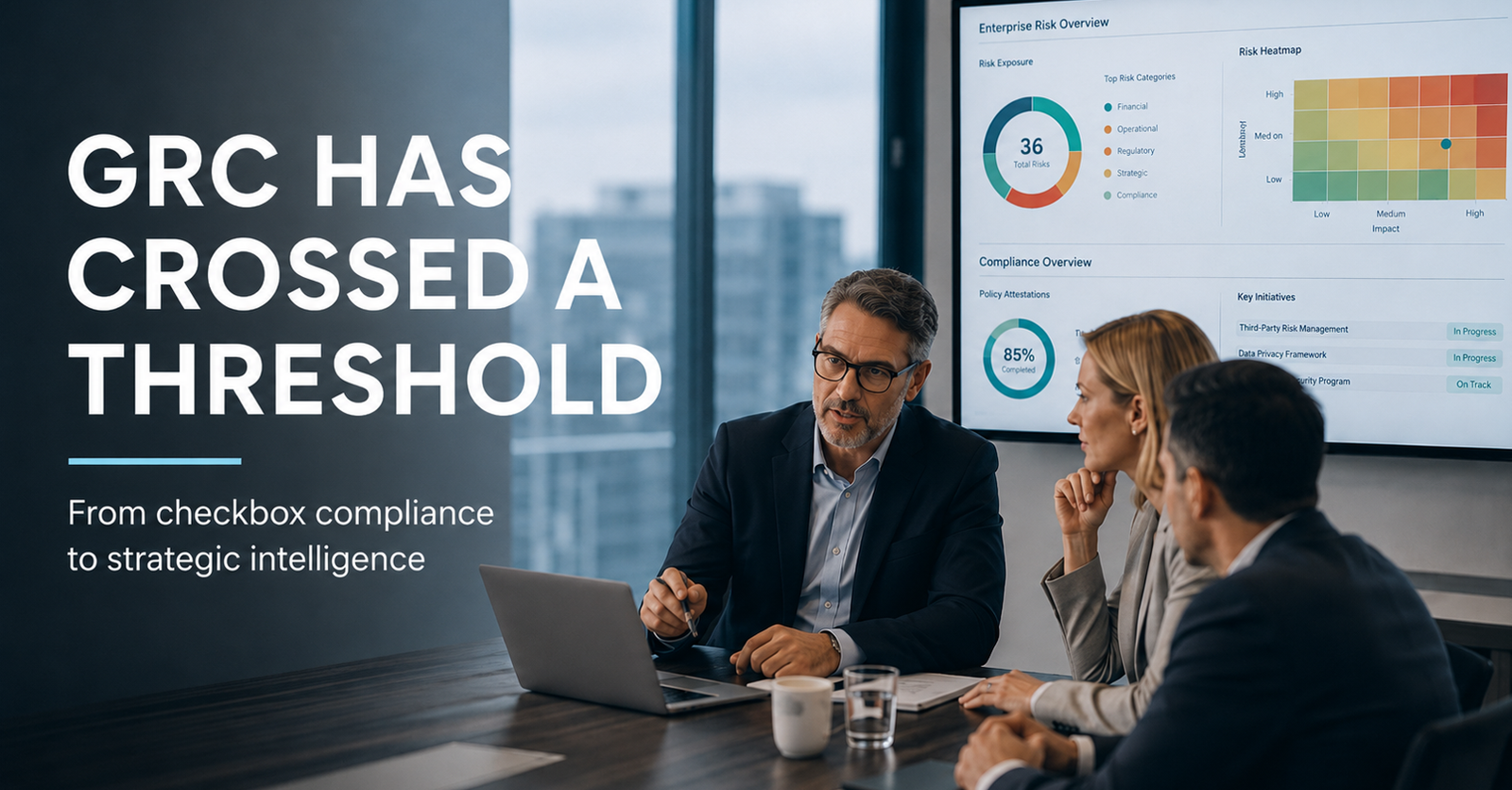
For many years, Governance, Risk and Compliance was treated as a necessary business function, but rarely as a strategic one.
It lived in policies, registers, spreadsheets, audit files, compliance attestations and board packs. It was often seen as the place where organisations documented what had already happened, proved that controls existed, responded to regulators, and demonstrated that obligations had been met.
In many organisations, GRC was also forced to operate inside legacy ERP-era systems that were never truly designed for dynamic risk intelligence. These platforms helped centralise process, but they often created rigid structures, fragmented data, heavy configuration cycles and slow reporting models.
That approach is now buckling under the pressure of modern enterprise risk.
Regulatory change is accelerating. Cyber threats are constant. AI adoption is introducing new ethical, operational and legal risks. Supply chains are more exposed. ESG expectations are evolving. Geopolitical instability can reshape markets overnight. A single incident can become a reputational crisis before a board pack is even prepared.
In this environment, GRC can no longer be reduced to checking boxes.
It has crossed a threshold.
GRC is becoming the strategic intelligence layer of the modern enterprise.
This means its role is no longer limited to recording risks, testing controls, managing compliance obligations or preparing audit evidence. Those functions remain important, but they are now only part of the picture.
The real value of GRC lies in its ability to connect signals across the organisation and turn them into actionable intelligence.
A risk recorded in a register should not sit in isolation. It should be connected to controls, incidents, obligations, audit findings, KRIs, third-party exposures, policy exceptions and emerging external signals. A compliance breach should not simply trigger a remediation task. It should inform control design, training priorities, executive reporting and future risk appetite discussions.
This is where legacy ERP-era GRC stacks begin to show their limits. They were built for structured processes, not always for continuous sensing. They were designed around systems of record, not necessarily systems of intelligence. They can document risk, but often struggle to interpret the velocity, interconnection and emerging nature of risk.
The next generation of risk intelligence platforms looks different.
They are configurable, connected and data-driven. They bring internal and external signals together. They link risks, controls, obligations, incidents, audits and third-party data into a single view. They use automation and AI not simply to reduce admin, but to surface patterns, detect early warnings, prioritise response and give leadership a live view of exposure.
Traditional GRC asked:
Are we compliant?
Modern GRC asks:
What is changing, what does it mean, and how should we respond?
That shift matters because boards and executives no longer need more static reports. They need insight. They need early warning. They need confidence that the organisation can identify, assess and respond to risks in real time.
But the goal is not technology for its own sake.
The goal is better governance.
The goal is to help organisations move from reactive compliance to proactive oversight. From fragmented risk management to connected intelligence. From manual evidence gathering to continuous assurance. From periodic reporting to real-time visibility.
This also changes the role of the GRC professional.
The GRC function is no longer simply a guardian of process. It is becoming a strategic partner to the business. It helps leadership understand uncertainty, prioritise investment, protect value and make better decisions.
Policies still matter. Controls still matter. Audit trails still matter. But they must form part of a broader intelligence ecosystem that supports resilience, accountability and performance.
The organisations that understand this shift will treat GRC as a source of competitive advantage. They will use it to anticipate risk, strengthen trust, improve decision-making and respond faster than their competitors.
Those that do not will continue to produce reports that describe yesterday’s problems.
The threshold has been crossed.
GRC is no longer just about proving that the organisation followed the rules.
It is about helping the organisation see what is coming, understand what matters, and act with confidence.
About the author
Unify Today Editorial
GRC Insight Team