
What Is Horizon Monitoring and Why Every Risk Team Needs It
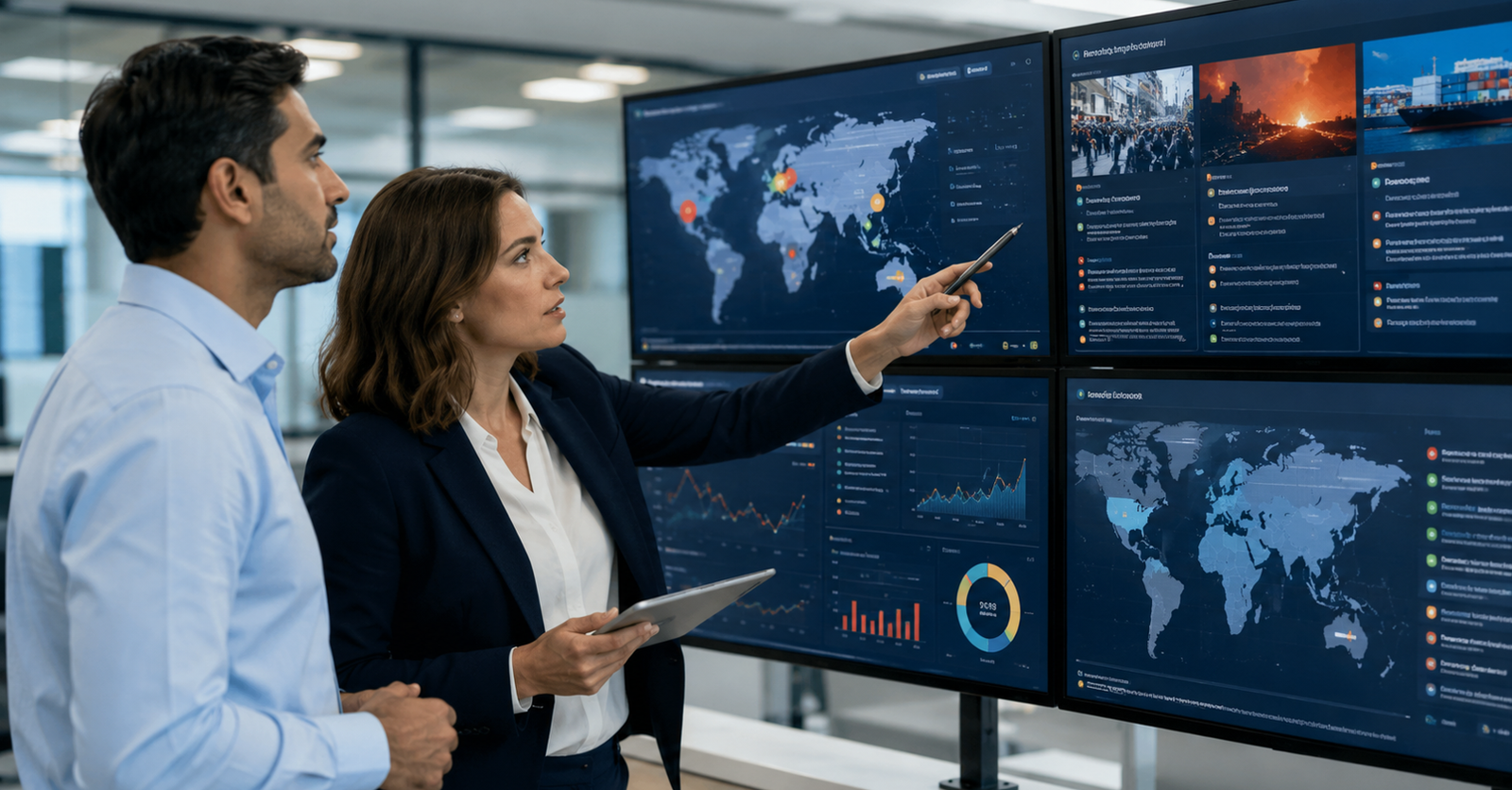
Horizon Monitoring continuously scans 220,000+ external sources to surface emerging threats, before they hit your risk register.
Most risk registers are rear-view mirrors.
They capture what has already happened, what was discussed in a workshop, or what someone remembered to write down during a quarterly review. They are useful, but they are often static, internally focused, and dependent on human interpretation at a single point in time.
That model is no longer enough.
Risk is now moving faster than traditional governance cycles can respond. Regulatory change, geopolitical instability, cyber threats, community sentiment, supply chain disruption, climate events, activist pressure, AI adoption, market volatility and social media narratives can all reshape an organisation’s risk profile in days, sometimes hours.
By the time these issues appear in a risk register, the organisation may already be reacting.
Horizon Monitoring changes the model.
Instead of waiting for risk teams to manually identify emerging threats, Horizon Monitoring uses AI to continuously scan external signals and map them to the organisation’s internal risk universe in near real time.
It turns risk management from a periodic exercise into a live intelligence capability.
From Rear-View Risk to Forward-Looking Intelligence
Traditional risk management relies heavily on internal inputs.
Workshops. Interviews. Incident reports. Audit findings. Control assessments. Compliance reviews. Management updates.
These are important, but they mostly tell the organisation what it already knows.
Horizon Monitoring looks outward.
It scans sources such as regulatory feeds, news, government publications, enforcement updates, social media, geopolitical developments, industry reports, competitor signals, legal changes, environmental indicators and market intelligence.
The objective is simple: detect weak signals before they become material events.
For example, a mining company may need to know when community sentiment near a site is deteriorating. A financial services firm may need early warning of regulatory scrutiny in a specific product category. A healthcare organisation may need to track policy shifts, data privacy enforcement, cyber threats and public trust signals.
In each case, the risk already exists before it appears in a formal report.
Horizon Monitoring helps risk teams see it earlier.
What Horizon Monitoring Actually Does
At its core, Horizon Monitoring connects external intelligence to internal risk management.
It does this through four practical steps.
First, it continuously scans large volumes of external data. This may include news, regulatory sources, social platforms, market updates, industry telemetry and other public or specialist data feeds.
Second, AI analyses those sources to identify relevant signals, themes, patterns and anomalies. Not every external event matters to every organisation. The value lies in separating noise from meaningful risk indicators.
Third, those signals are mapped to the organisation’s internal risk taxonomy. This is the critical step. External intelligence becomes valuable when it is connected to known risks, controls, obligations, KRIs, incidents, business units, suppliers, geographies or strategic objectives.
Fourth, the platform alerts the right people and supports action. Risk owners can review the signal, validate its relevance, assess potential impact and decide whether to update a risk, trigger a control review, escalate an issue, launch an investigation or prepare an executive briefing.
This is the difference between monitoring the world and managing risk.
Why Risk Teams Need It
Risk teams are increasingly expected to provide strategic insight, not just maintain registers.
Boards do not want a longer list of risks. They want to know what is changing, what matters, and what the organisation should do about it.
Horizon Monitoring helps answer those questions.
It gives risk teams earlier visibility of emerging threats. It improves the quality of executive reporting. It strengthens regulatory readiness. It supports more dynamic risk assessments. It helps organisations understand how external events may affect internal exposure.
Most importantly, it reduces dependency on slow, manual discovery.
A risk workshop may identify what people already believe is important. Horizon Monitoring helps identify what is emerging outside the organisation’s immediate field of view.
That distinction is powerful.
The next major risk to the organisation may not start in a boardroom. It may start in a regulator’s consultation paper, a community post, a supply chain disruption, a competitor incident, a court judgment, a policy shift, or a pattern of media coverage.
Risk teams need a way to see those signals early.
Moving Beyond Static Registers
The risk register is still important, but it cannot be the centre of the risk universe on its own.
A modern risk register should be connected to live intelligence.
When an external signal is detected, it should be possible to see which risks it relates to, which controls may be affected, which obligations are relevant, which business areas are exposed, and which executives need to know.
This creates a more dynamic risk environment.
Instead of reviewing risks only at set intervals, risk owners can respond when the external environment changes. Instead of waiting for a quarterly pack, leadership can receive early warnings. Instead of manually searching for updates, the organisation can build a structured intelligence layer around its risk framework.
This is where Horizon Monitoring becomes more than research.
It becomes a governance capability.
The Role of AI
AI is what makes Horizon Monitoring scalable.
No risk team can manually read every regulatory update, news story, enforcement action, social signal, geopolitical development and industry report relevant to the organisation.
AI can process high volumes of information, identify patterns, classify themes, detect anomalies and surface signals that may require human review.
But AI should not replace risk judgement.
The strongest model is human-led and AI-enabled.
AI scans, filters and maps signals.
Risk professionals validate relevance.
Business owners assess operational impact.
Executives decide on response.
The system records the evidence and action taken.
This creates both speed and accountability.
It also avoids one of the biggest risks of AI adoption: treating machine output as final truth. In Horizon Monitoring, AI should support better human judgement, not bypass it.
What Good Horizon Monitoring Looks Like
A mature Horizon Monitoring capability should include:
A defined external signal universe
A clear internal risk taxonomy
AI-supported signal detection and classification
Mapping between external events and internal risks
Human-in-the-loop validation
Automated alerts to relevant risk owners
Integration with controls, obligations and KRIs
Executive reporting and trend analysis
Audit trails showing review and response decisions
The goal is not to create more alerts.
The goal is to create better prioritisation.
Risk teams already suffer from information overload. Horizon Monitoring should reduce that burden by filtering external complexity into relevant, contextualised, actionable insight.
From Awareness to Action
The real value of Horizon Monitoring is not knowing that something happened.
It is knowing what it means for your organisation.
A regulatory change should map to affected obligations and controls.
A geopolitical event should map to exposed suppliers, markets or operations.
A negative media pattern should map to reputation, conduct or social licence risks.
A cyber advisory should map to vulnerable systems and control owners.
A competitor incident should prompt a review of similar internal exposure.
This is how Horizon Monitoring turns external intelligence into enterprise action.
Without that connection, organisations simply collect information. With that connection, they improve governance.
The Future of Risk Is Forward-Looking
Risk teams are under pressure to become more strategic, more proactive and more evidence-driven.
Horizon Monitoring helps them do exactly that.
It moves risk management beyond static registers and periodic reviews. It gives organisations a way to detect emerging issues earlier, understand their relevance faster, and respond with greater confidence.
Most risk registers show where the organisation has been.
Horizon Monitoring helps show what may be coming next.
And in a world where risk moves faster than the quarterly cycle, that capability is becoming essential.
About the author
Unify Today Editorial
GRC Insight Team